Menu
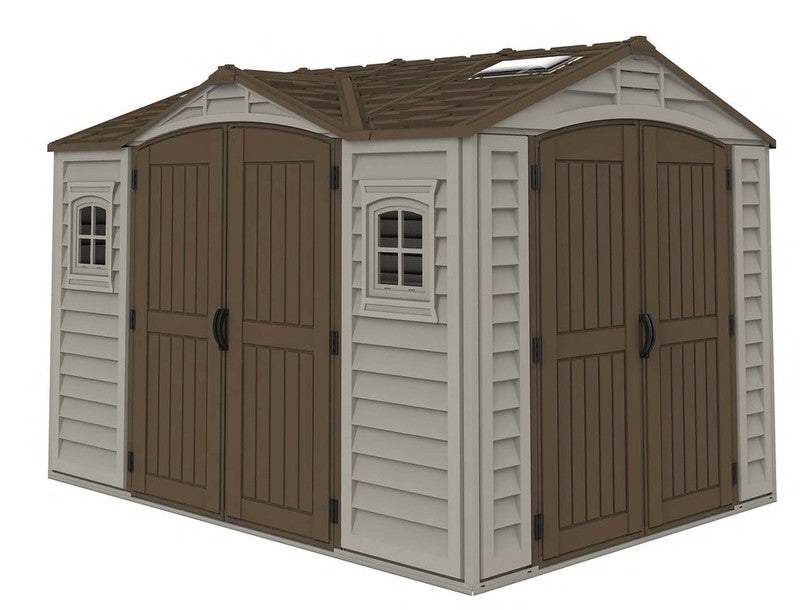

The best storage shed is the one that fits your yard, protects your equipment and makes everyday access easy. This guide explains how to compare sizes, materials, doors, foundations and total costs—then helps you shop a configuration that works for you.
Measure your mower, bicycles, wheelbarrow, long-handled tools and seasonal supplies. Include the space needed to open doors and maneuver equipment. Sketch shelving and a walking path; advertised square footage is not the same as practical usable space.
| Size | Typical use | Shop |
|---|---|---|
| 4×8 or 4×10 | Narrow side-yard storage | 4×8 / 4×10 |
| 6×6 or 8×6 | Garden tools and seasonal equipment | 6×6 / 8×6 |
| 10×8 or 10×10 | Walk-in mower, bicycle and shelf storage | 10×8 / 10×10 |
| 10×13 and above | Larger equipment and multiple storage zones | 10×13 / Larger |
Nominal dimensions are only shopping labels. Check each shed's exterior dimensions, actual door opening and interior clearance before ordering.
A practical option for lower-maintenance outdoor storage. Vinyl does not require regular painting and is not prone to wood rot. Examine reinforcement, ventilation and exact installation requirements rather than assuming all vinyl sheds are built alike. Browse vinyl sheds.
Metal can suit shoppers prioritizing particular sizes and value. Compare coatings, corrosion resistance, ventilation, assembly details and structural specifications. Browse metal sheds.
Molded resin models vary in construction and floor inclusion. Wood may offer traditional styling but can require more protective finishing and ongoing maintenance. Evaluate total project costs as well as purchase price.
Compare the clear opening width with your largest lawn equipment. Wide-access double doors can help with mowers, bicycles or wheelbarrows. Think through door swing, nearby fences, gate access, thresholds and ramps. In a narrow yard, door position may matter as much as square footage.
Before buying, determine whether the chosen model includes a metal foundation frame, floor panels, both or neither. A foundation frame is not the same thing as a finished floor or supporting base. Follow the installation guide and confirm local zoning, setbacks, anchoring requirements and drainage. The suitable base depends on the model and site conditions—not every shed necessarily requires a concrete slab.
Plan for the shed itself, site preparation, supporting base, flooring if necessary, anchoring, delivery access, assembly labor and optional shelving or ramps. Read the product's shipping and delivery details carefully; unloading and installation services may not be included.
Look at shallow 4×8 and 4×10 configurations, verify actual dimensions and measure the door swing and installation clearance. Shop 4×8 sheds.
It depends on the equipment and desired access path. Measure the door opening and draw a layout before selecting a 10×8 or larger shed.
Yes. Although vinyl generally avoids painting and staining, regular cleaning and checks of doors, ventilation, roof and anchoring are still important.
No. Check the product specifications: a foundation frame, supporting base and finished floor are separate components.
Browse our outdoor storage sheds and check model specifications, delivery and installation instructions before ordering.
Explore detailed answers before selecting your shed: